
新闻中心 |
新闻详情
当前位置:
首页>
新闻详情
Duster Aerosol Packaging Guide
发布日期:2026-10-22
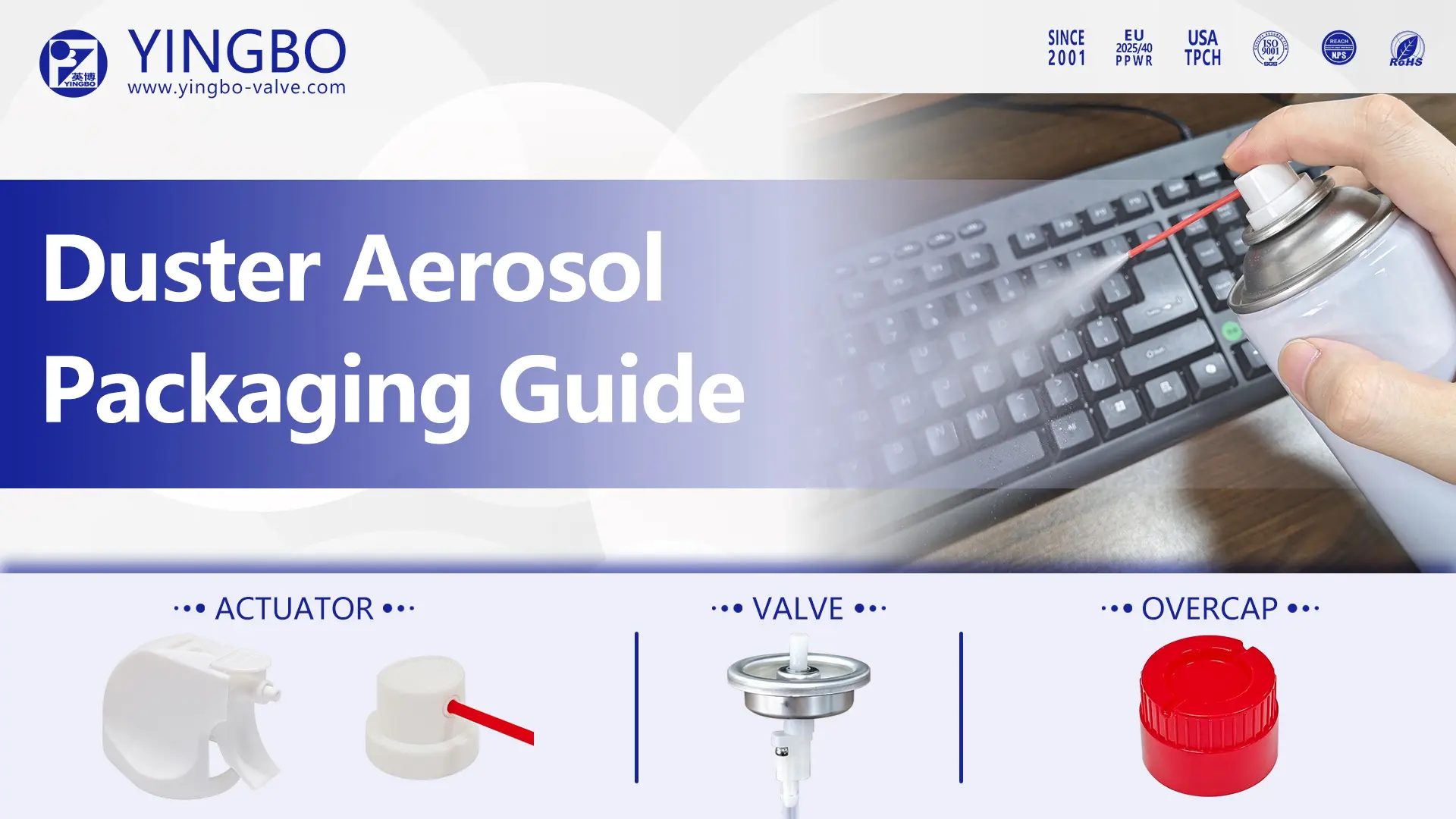
An aerosol duster is not a can of air. It is a pressurized metal package filled with liquefied propellant, often sold under names such as canned air, compressed air duster, compressed gas duster or pressurized gas duster. When the actuator is pressed, propellant flashes through the valve, nozzle and extension tube, producing a short high-velocity jet that removes loose dust from keyboards, PCBs, printer gaps, camera-adjacent areas and other surfaces that should not be cleaned with water or aggressive wiping. 1. What the Aerosol Duster Market Is Really Optimizing The aerosol duster category still has a clear use case: instant availability, strong peak jet, narrow-gap cleaning, no charging and no maintenance. That is why 10 oz consumer cans remain common in office and electronics channels. The pressure on the category is coming from two sides. The first pressure is climate policy. High-GWP HFC routes are under tighter review in the U.S. and Europe. The second pressure is substitution. Electric dusters and rechargeable blowers are not perfect, but they keep pushing the “one tool replaces many cans” argument into mainstream retail. The strongest product trend is not simply “more blast force.” It is the combined improvement of spray control, low-GWP compliance, recyclability, misuse resistance, cold-touch reduction and liquid-spit control. That moves the discussion from chemistry alone to a full metal packaging system. 2. Product Definition and Working Principle The product is best defined by its function: a pressurized gas duster removes loose surface dust by gas mass flow rather than by solvent cleaning. CARB defines Pressurized Gas Duster as a pressurized product used only to remove dust from a surface by a gas stream, with examples such as photos, negatives and computer keyboards. A typical aerosol duster consists of a metal can, mounting cup, valve, valve stem, actuator, orifice and extension tube. The CPSC proposed rule package shows a typical structure in which much of the can volume is liquid propellant, with vapor space above it. When the user presses the actuator, the valve opens. The pressure difference drives liquefied propellant through the valve and nozzle. The rapid expansion produces the jet. This is why aerosol dusters feel stronger than bulb blowers and many low-end rechargeable devices during the first short burst. They do not rely on a small fan. They rely on stored pressure and phase change. First, if the can is inverted, tilted too far or held down for a long continuous spray, unevaporated liquid can reach the nozzle. This is the usual cause of “wet keyboard” or frost complaints. Second, fast propellant release cools both the can and the target area. A water-like mark on the surface may be environmental condensation, not water inside the can. Third, bitterant can help discourage inhalant abuse in consumer products, but it may leave taste or residue concerns in professional electronics maintenance. 3. Market Size and Regional Outlook Air Duster Market Scope Sources
Growth Drivers and Barriers Demand is not driven mainly by household cleaning. The stronger drivers are electronics density, maintenance of servers and IT assets, and continued concentration of electronics manufacturing in Asia. The IEA projects global electricity generation used to supply data centers to grow from about 460 TWh in 2024 to over 1,000 TWh in 2030. That does not directly equal duster volume, but it expands the asset base that needs non-contact dust removal. Barriers are unusually strong for a low-ticket consumable. They include inhalant abuse regulation, HFC climate policy, dangerous goods transport, warehouse constraints, e-commerce age gates, and electric substitutes. Regional logic is also uneven: North America has mature channels but sensitive safety regulation; Europe is pulled by low-GWP and recycling claims; Asia-Pacific benefits from manufacturing and data centers; Latin America is more price-sensitive; Africa remains small and import-led. 4. Solution Comparison, Formulation and Terms Consumer language often calls aerosol dusters “compressed air.” Strictly, most of them are not pure compressed-air tanks. They are pressurized propellant containers. The real commercial alternatives are manual bulb blowers, plug-in electric dusters, rechargeable blowers, and filtered compressed-air or nitrogen workstations. Cleaning Route Comparison
The real substitute threat is not the manual bulb blower. It is the plug-in or rechargeable electric duster. Once a user cleans equipment once or twice a month, the “one electric unit replaces many cans” argument starts to make sense. Aerosol Duster Formulation Categories
Modern product planning should not be limited to one “10 oz duster” SKU. At minimum, the category splits into four technical logics: economy retail, non-flammable professional, low-GWP upgrade, and bitterant-free clean professional. Practical Aerosol Duster Terminology
5. Regulatory and Compliance Framework Compliance is not one chemical approval question. Aerosol dusters sit at the intersection of safety, environment, hazard communication, aerosol dispenser rules, transport, e-commerce policy and channel labeling. 5.1 United States The largest U.S. variable is the CPSC proposed rule on HFC-152a and HFC-134a in aerosol duster products. If adopted as drafted, a product containing more than 18 mg of these propellants in any combination would be treated as a banned hazardous substance under the FHSA. This changes long-term formulation assumptions. A product team should not assume that HFC-152a can remain the only U.S. consumer route. The EPA’s SNAP and AIM Act-related programs add a separate climate and substitution layer. These environmental rules are not the same as the CPSC inhalation-abuse proposal, but they influence the same formulation roadmap. 5.2 Europe Europe is driven by REACH/CLP for chemical registration and labeling, F-gas rules for HFC phase-down, and aerosol dispenser requirements for pressure and labeling. The EU climate policy page states the direction clearly: the F-gas framework tightens controls on fluorinated greenhouse gases and moves HFCs toward long-term phase-out. For classification and labeling, CLP remains the core framework. Claims such as “ozone-safe” are no longer enough for professional buyers. GWP, substance registration, label phrases and safety data sheets need to line up. Regulatory Priority Checks by Market
6. Technology Progress, Brand Structure and User Pain Points Latest Technical and Market Direction The most visible shift is the move from high-GWP HFC language toward lower-GWP commercial products. HFO-1234ze is already being used in professional low-GWP duster positioning. A second route is system-level substitution. Pressurized packaging using compressed air or inert gas does not copy a dusting gas can one-to-one, but it shows that spray performance and reduced traditional propellant reliance can be engineered together. A third route is packaging circularity. Aerosol cans have a strong recycling story when they are empty and correctly sorted. For electronics cleaning products with a low product weight but high environmental concern, clearer recycling instructions will matter more in enterprise procurement. Valve and actuator development is becoming more important. A 360° valve directly addresses angle-related flow problems, and a twist-to-lock actuator reduces accidental discharge and lost-cap problems. The fifth trend is cleaner professional positioning: low residue, no bitterant where appropriate, and tighter filtration claims. This is where aerosol duster starts to behave less like an office consumable and more like an electronics maintenance material. User Pain Point Classification
These complaints reduce to four design tasks: prevent liquid spit and overcooling, manage bitterant side effects, improve spray consistency after partial use, and make single-use cost feel technically justified. 7. Packaging and Structural Improvement Suggestions Users are not only complaining about propellant. They are reacting to the whole system: valve, actuator, can body, tube, label and use instruction. Product improvement should be treated as a system project, not a graphics refresh. Packaging Improvement Suggestions
If only three upgrades can be funded, start with the valve’s liquid-spit and angle consistency, then improve actuator locking and cold isolation, then simplify user instructions. Those three changes address the most visible complaints: wet spray, cold handling and incorrect use. Tip: Anti-misuse design should not mean “add more bitterant” only. Better practice is a mix of propellant selection, lockable actuator, large safety marking, channel control and separate professional low-residue SKUs. 8. Product Fit: Shining Packaging Actuators, Cans and Valves For an aerosol duster, the package is part of the performance. The actuator determines finger control and misuse resistance. The valve determines flow stability, orientation tolerance and liquid-spit behavior. The metal can and internal coating determine pressure integrity, shelf life and compatibility with propellant and additives. Relevant work sits in these system parts: actuators, aerosol cans and valves. In a duster project, these parts should be reviewed together with propellant type, fill ratio, desired spray force, target market regulation and user instruction. A stronger can alone will not solve liquid spitting. A new actuator alone will not solve poor vapor control. The useful engineering work is the matching of can, valve and actuator to the actual duster use case. For consumer aerosol dusters, the main packaging questions are locking behavior, short-pulse control, tube retention, cold-touch comfort and clear label space. For professional electronics dusters, the focus shifts to low residue, flow repeatability, documentation, coating compatibility and tighter part consistency. 9. Conclusion Aerosol duster remains useful because it gives a strong short jet from a simple package. The weak points are equally clear: cold feel, liquid spit, bitterant concerns, partial-can inconsistency, regulatory pressure and competition from reusable electric tools. The next good aerosol duster will not be defined only by a larger can or louder spray. It will be defined by a better matched system: lower-GWP propellant where required, valve design that controls liquid and angle, actuator design that reduces misuse, metal packaging that supports compatibility and recycling, and instructions that match how users actually handle the can. 上一页:电商助缆业转型升级
下一页:找不到相关信息
|

广东省中山市东区白沙湾第二工业区8栋
+86 760 88322093 88314312
market@yingbo-valve.com
